- You need a standard barber license in the state you work in — there's usually no separate "mobile" license for individual barbers, but rules on cutting outside a licensed shop vary by state.
- In Connecticut that means 1,000 hours of barber school (or a 2,000-hour registered apprenticeship) and the state exam.
- Mobile work pays a premium: at Doorbell, a $100 in-home haircut pays the barber $60 plus 100% of the tip, with no chair rent.
- The hardest part of going mobile isn't the cutting — it's finding clients, scheduling, collecting payment and covering insurance. That's where joining an established team helps.
My grandfather, Joe Iannucci, was a Connecticut barber his whole life. He never stopped making house calls — to clients who couldn't get to his shop, to hospital rooms, well into his later years. When I started Doorbell Barbers in 2015, I built it on that idea: the barbershop should come to you.
Ten years later our barbers work in wedding suites from Vermont to Palm Beach, arena green rooms, offices, care homes and kitchens across Fairfield County. Along the way I've learned exactly what separates barbers who thrive on the road from the ones who go back to the shop. Here's the whole playbook.
What a mobile barber actually does
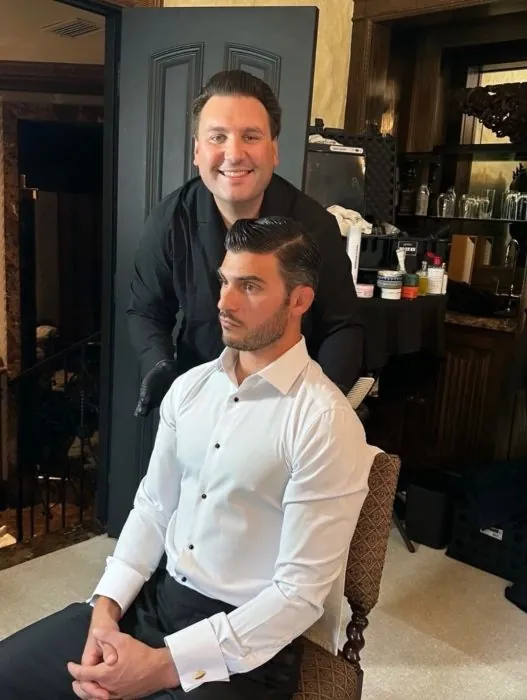
A mobile barber brings the full barbershop experience — the cut, the hot towel, the conversation — to wherever the client is. In practice, that work falls into a few lanes:
- Wedding mornings. Grooms, partners, fathers and groomsmen getting ready together. Often the highest-energy, highest-tipping work there is.
- Tours and venues. Backstage grooming for artists and touring crews on show days.
- Corporate wellness and events. Haircuts booked in time slots at offices and brand pop-ups.
- In-home regulars. Busy professionals, dads with kids, clients who simply prefer privacy.
- Senior and care visits. Assisted living, memory care, hospice and bed-bound clients — some of the most meaningful work in barbering.
The technical skill is the same as in the shop. What changes is everything around it: travel, setup, timing, reading a room that isn't yours.
Step 1: Get licensed (and understand the rules for working outside a shop)
Every state requires barbers to be licensed. The U.S. Bureau of Labor Statistics notes that all states license barbers, hairstylists and cosmetologists. Requirements vary, so start with your state board.
Connecticut barber license requirements
In Connecticut, barber licenses are issued by the Department of Public Health. According to DPH, applicants need:
- At least an 8th-grade education or equivalent;
- At least 1,000 hours at a school approved by the Connecticut State Board for Barbers, Hairdressers and Cosmeticians (out-of-state schools approved by their own state's regulator are accepted);
- A passing score on the Connecticut barber exam, administered by Prometric (offered in English and Spanish).
Since 2015, Connecticut also allows a registered apprenticeship to substitute for school: at least 2,000 hours of on-the-job training under a licensed barber, plus related theory hours through an approved school. The Connecticut Department of Labor runs the apprenticeship program.
Already licensed in another state? DPH asks for license verification from every state where you've held a barber license. A cosmetology/hairdresser license (1,500 hours in Connecticut) also covers cutting hair, which is why many mobile teams, including ours, work with both.
Can you legally cut hair outside a barbershop?
This is the question every new mobile barber should ask, and the honest answer is: it depends on the state. Some states write explicit permissions into law. North Carolina's cosmetic art statute, for example, lets licensees visit clients who are sick or confined at home, plus hospitals, nursing homes and similar institutions. In 2015, Texas lawmakers advanced a bill to let barbers and cosmetologists serve clients at special events like weddings outside a licensed facility. Other states regulate mobile units, require a shop affiliation or are silent.
Before you go solo, call your state board and ask specifically about home visits, events and care facilities. Joining an established mobile company that already operates within the rules is the simplest path.
Step 2: Put in real shop years first
At Doorbell we look for three or more years behind the chair, and I'd give the same advice to anyone going solo. In a shop, there's a senior barber two chairs down when a cut goes sideways. In a bridal suite with a photographer at the door, it's just you.
Before going mobile, make sure you're confident with:
- Fades on every hair type, and scissor-over-comb on longer styles;
- Beard shaping and line work in imperfect lighting;
- Straight-razor shaves with hot towels (a wedding-morning staple);
- Kids, seniors and clients with sensory or mobility needs;
- Working fast without looking rushed — a groom's cut has a hard stop.
Step 3: Understand what mobile barbers earn
For context, the BLS reports the median hourly wage for barbers was $18.73 in May 2024, with the combined barber, hairstylist and cosmetologist group at a median of $35,420 a year. Most of that work happens in shops.
Mobile work pays more per service because clients are paying for convenience, privacy and an experience. Here's how the math works for a barber on our team:
| Work | Client price | Barber earns |
|---|---|---|
| In-home gentleman's haircut | $100 | $60 + 100% of tip |
| In-home shave | $95 | $57 + 100% of tip |
| Father & son | $175 | $105 + 100% of tip |
| Corporate / pop-up event day | — | $500 flat |
| Arena / tour show day | — | $700 flat |
There's no chair rent, no booking software, no marketing budget and no chasing payments — clients pay in advance and barbers are paid daily. Want to model your own month? Use the earnings calculator on our careers page.
Step 4: Build a mobile kit that never needs an outlet
Your kit is your shop. The single biggest upgrade: go cordless. Venues, historic inns and arena back rooms rarely have an outlet where you need one.
- Cordless clippers (two, fully charged)
- Cordless trimmer and foil shaver
- Shears, thinning shears, combs
- Straight razor and fresh blades, sharps container
- Portable towel warmer and towels
- Capes, neck strips, cape clips
- Spray bottle, neck duster, styling products
- EPA-registered disinfectant and wipes
- Handheld mirror
- Portable LED light
- Floor mat or drop cloth
- Cordless hand vacuum and lint roller
- Shoe covers for homes
- Power bank and backup batteries
- A rolling case that fits your car
Step 5: Decide — go solo or join a mobile team?
Going solo means keeping 100% of every ticket. It also means you're the marketer, receptionist, accountant and collections department. Before you decide, price out what a solo mobile business actually needs:
- Liability insurance for working in clients' homes and venues;
- A website, booking software and online payments;
- Marketing to fill the calendar — ads, SEO, wedding listings, Instagram;
- Deposits and cancellation policies to protect against no-shows;
- Drive time you don't get paid for if bookings are scattered.
Joining an established mobile company trades a share of each ticket for all of that. At Doorbell, barbers keep 60% and all their tips, and we handle the clients, the booking, the payments and $1M/$2M general liability coverage. Many of our barbers keep their shop chair and work with us on days off. There's no wrong answer — just know which business you want to run.
Licensed barber in CT, NY or New England?
We're hiring for weddings, tours, corporate days and in-home clients. Apply in 3 minutes and book your phone interview instantly.
See the barber job →Step 6: Learn the rules of the house
The barbers who last on the road all share the same habits:
- Early is on time. Clients plan their day around your arrival. On a wedding morning, the timeline is set to the minute.
- Leave it better than you found it. Every hair swept, every surface wiped. Bring a hand vac and use it.
- Dress the part. Our team wears all black — clean, neutral and invisible in photos.
- Communicate before you're asked. Running five minutes behind? Text before it matters.
- Read the room. A nervous groom, a 90-year-old veteran and a headliner before a show need the same skill and very different energy.
The mobile work that pays best (and how it runs)
Wedding mornings
The getting-ready hours are part of the wedding now. A typical run of show: the fathers go first, the groom goes third (never last), and the final 30 minutes are reserved for styling and photos. A good wedding barber also handles bowties, boutonnieres and photographer timing. It's where your work gets seen — and photographed.
Tours and arenas
Show days run on call times. You'll set up a station in a back room, take walk-up crew bookings through the day and work around soundcheck. Professionalism and discretion matter as much as the fade.
Senior and care visits
This is the work my grandfather did. Patience, gentle hands and comfort with wheelchairs, walkers and beds. Families often tell us their parent looks forward to it all month.
Frequently asked questions
Do you need a special license to be a mobile barber?
You need a standard barber or cosmetology/hairdresser license in the state where you work. Rules about practicing outside a licensed shop vary by state, so check with your state board or join an established mobile company.
How many hours does a Connecticut barber license take?
At least 1,000 hours at a board-approved barber school, or a registered apprenticeship of at least 2,000 hours, plus the Connecticut barber exam administered by Prometric.
How much do mobile barbers make?
The U.S. median for barbers was $18.73/hour in May 2024. At Doorbell, barbers earn $60 plus tip on a $100 in-home haircut and $500–$700 flat on event days.
Can I be a mobile barber part time?
Yes. Many of our barbers keep a shop chair and work weekend weddings or a few in-home clients on their days off.
Ready to take the shop on the road?
60% of every service. 100% of your tips. Daily pay. No chair rent. Weddings, tours, corporate and in-home clients booked for you.
Apply to Doorbell Barbers →Sources
- U.S. Bureau of Labor Statistics — Barbers, Hairstylists, and Cosmetologists (Occupational Outlook Handbook)
- Connecticut DPH — Barber License by Examination
- Connecticut General Assembly — PA 15-31, barber apprenticeships
- Connecticut DOL — Barbershop apprenticeship requirements
- North Carolina G.S. 88B-15 — Practice outside cosmetic art shops
- Texas Legislature — H.B. 104 (2015) bill analysis
This article is general information, not legal advice. Licensing rules change; confirm current requirements with your state board.
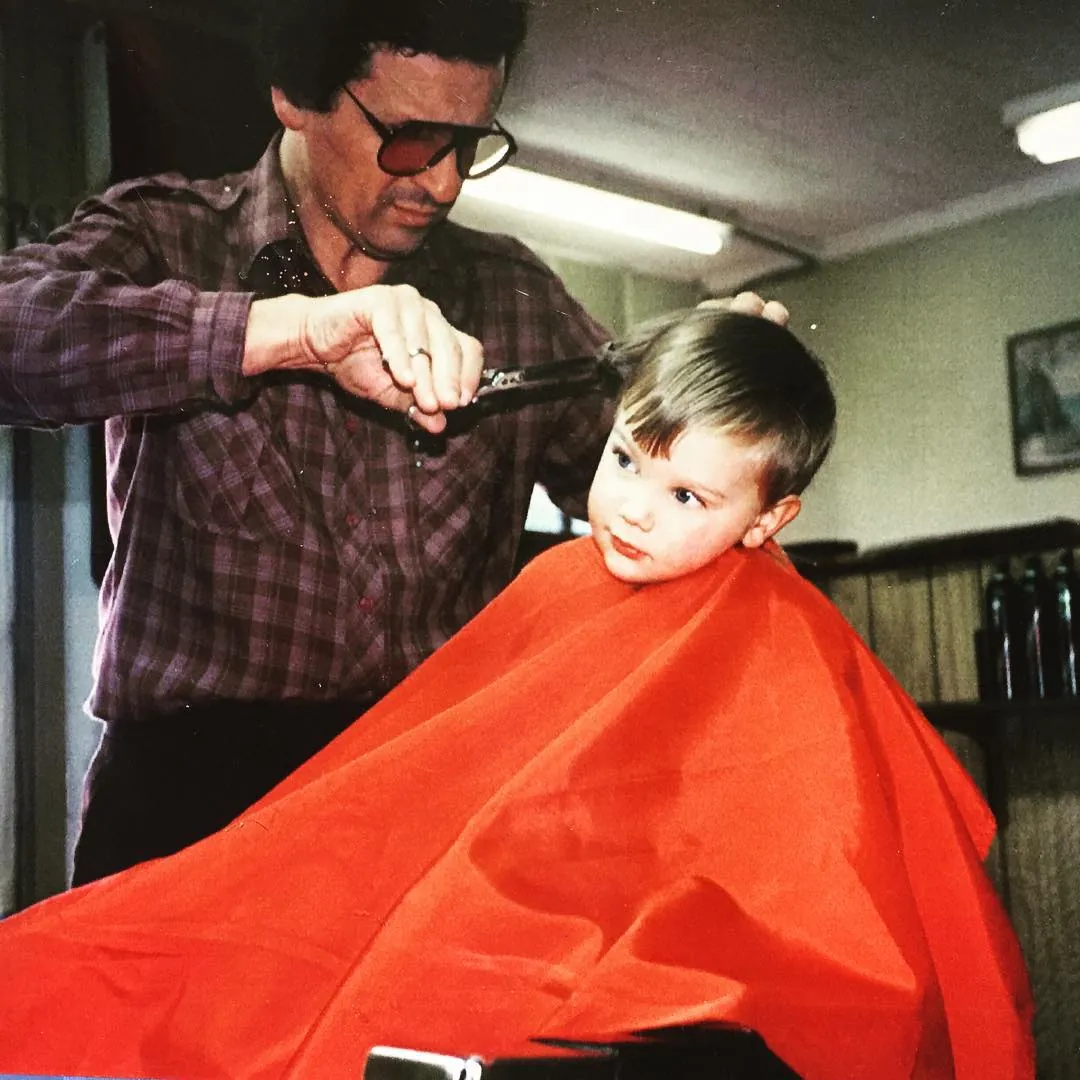
Christian Patrick founded Doorbell Barbers in 2015 on his grandfather Joe Iannucci's tradition of house calls. Doorbell's barbers have been featured in Vogue and GQ and serve weddings, tours, offices and homes across the Northeast. Read our story.